
A Mansplainer: Why Hamnet Doesn’t Work
Everyone seemed to like the novel, Hamnet. Before I got round to reading it, it had been turned into a film, with plenty of fanfare. I set out to the cinema confident that I was going to enjoy this one.
But I didn’t it. And it turned out that quite a lot of other people didn’t either.
To be fair, quite a few people did like it. They cried, and everything. So… if, unlike me, you were moved by the film, you might be interested in some reasons why not everyone felt the same way.
I’ll start with its main virtue, just to get it out of the way.
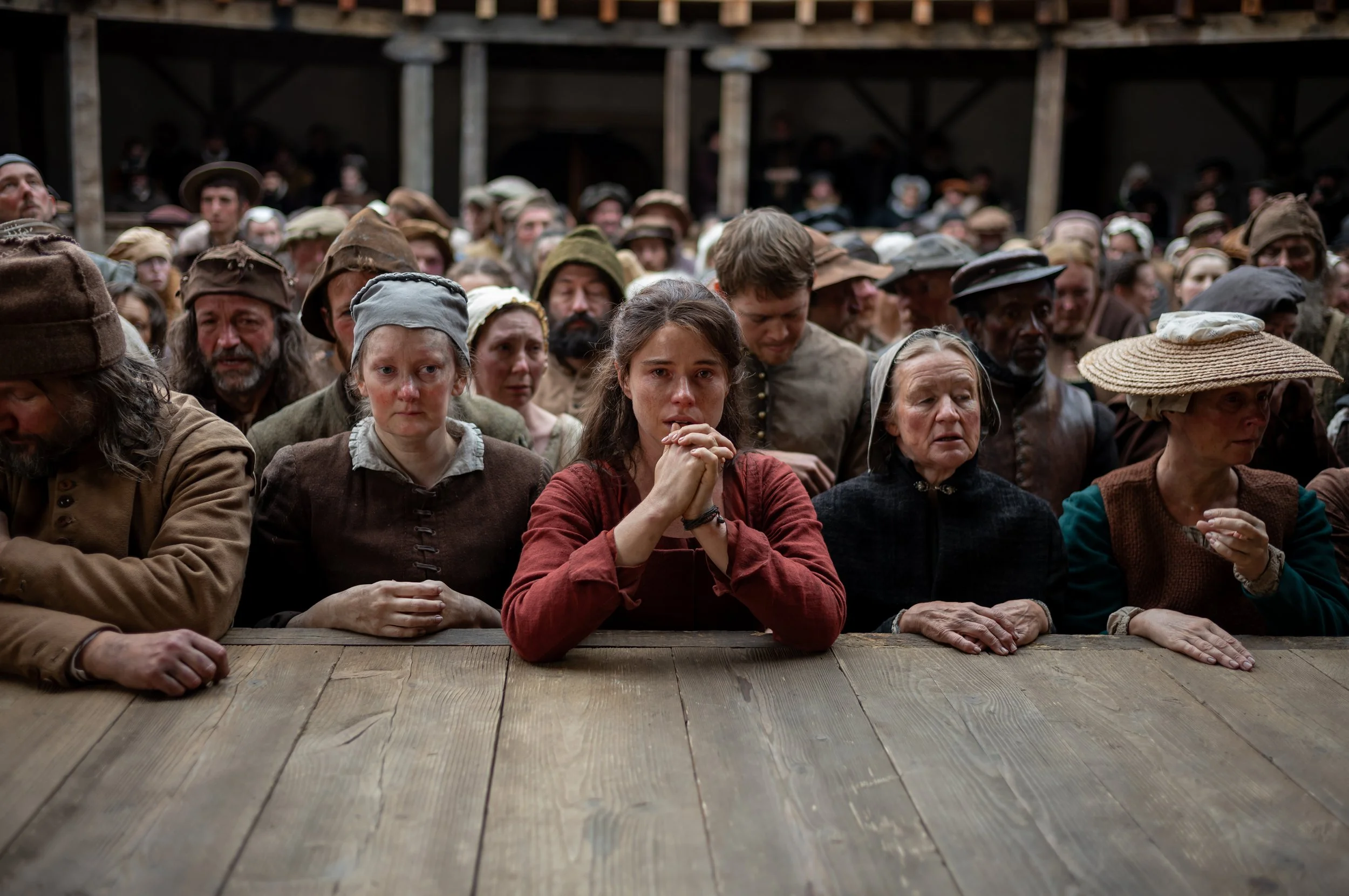
As an evocation of the awful experience of the death of a child, it has power. It shows that even in an age of routine infant mortality, a parent would be emotionally eviscerated by it. Jessie Buckley conveys this memorably, through sheer force of acting.
The sequence in the middle of the film, leading up to the death, is also gripping. Elsewhere, I talk about how if the audience knows something but one of the characters doesn’t, the audience is sucked into the action – is complicit in events. In Hamnet, there is a moment, where the boy climbs into bed with his sick sister. We’ve been told that the two children must be kept apart because of the deadly plague – we know this shouldn’t happen. It’s one of those moments that makes you react physically: you gasp, or start forward out of your seat to stop the action on the screen.
But the film was mostly lost to me by that point. Here are some reasons.
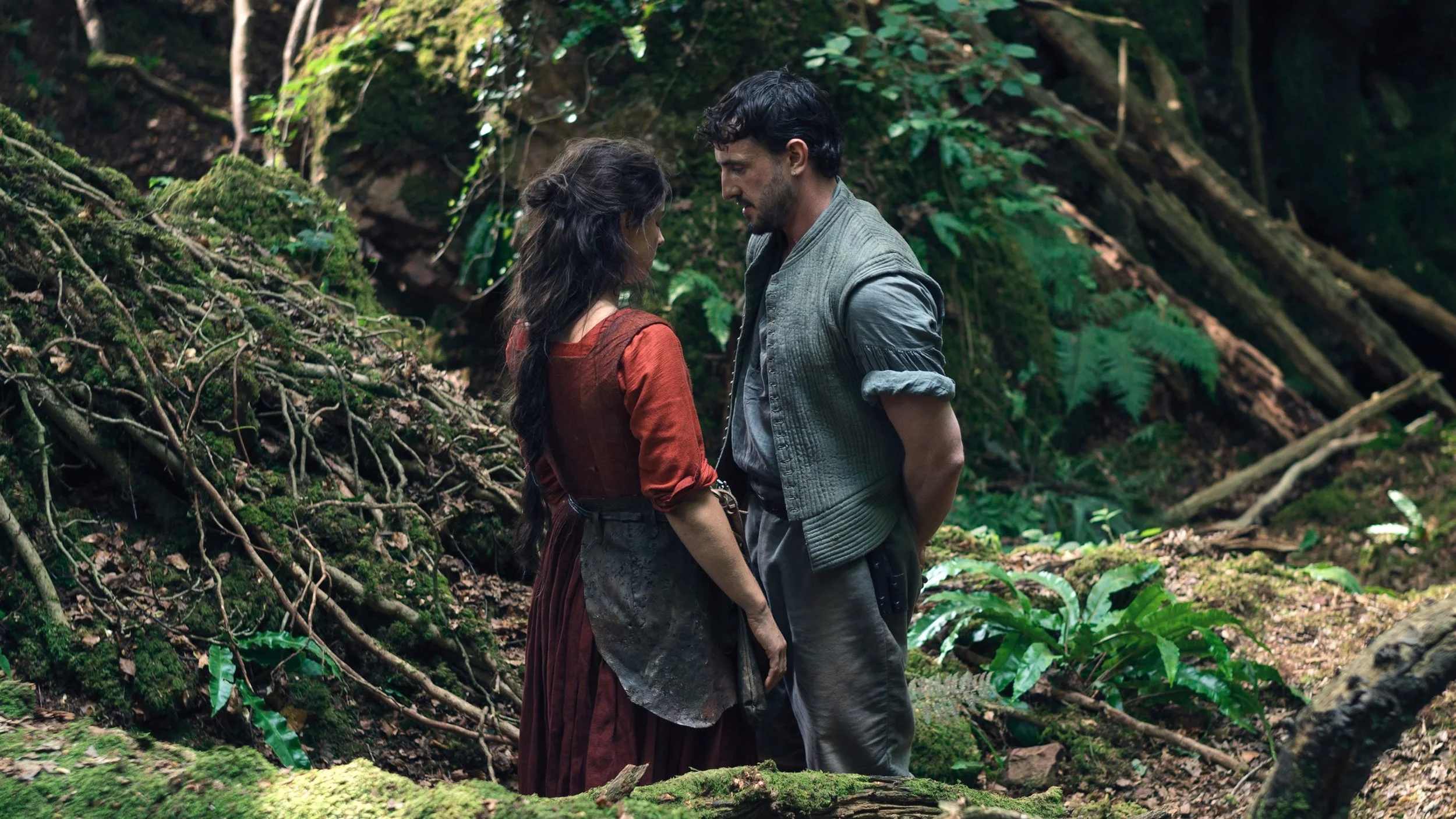
Film is about what we see. What we look at. In the opening sequence, Anne is asleep in the forest and walks back to her family’s house with a hawk on her arm. OK, I’m interested. This woman has something about her.
Will is tutoring her brother in the house. He sees her walk out of the forest.
Kind of. I mean, there was no drama to it. There was no shot that was clearly, definitively showing me his point of view.
What is he seeing? What does he see when he sees her? Because I didn’t know. Is he setting eyes on her for the first time? Has he had his eye on her for a while and finally has a chance to talk to her? This matters. For a love story to work, it’s essential that the first sight the lovers have of each other is momentous – even if, as in Harry Met Sally, they do the opposite of fall in love. There will always be a shot of one of the loved from the point-of-view of the lover: for a moment, we see what they are seeing. In this film, there is no such moment.
A few scenes later they’re having sex in some sort of potting shed. The camera jumps up into the corner of the room like a Tudor CCTV. Why? If I’m going to see the characters shagging (and, by the way, I really don’t mind if I don’t) I want to learn something or feel something. I want to know what this means to them. As it is, the audience are voyeurs. We are not brought into the moment.
All in all, their getting together seems to be perfunctory and random. Just like any rushed marriage in an English village in old times. That could be OK. Maybe it’s not about the love between this man and woman. But then, what am I supposed to care about if not their relationship? It doesn’t have to be a conventional love story, I get that, but it has to be something.
What’s going wrong is that the script doesn’t know if it’s a romance or not. If it is, it has to deliver on the genre points somehow. If it isn’t, it shouldn’t try to borrow from the genre. You can’t cheat that way. Screenwriting rule: decide if you’re in the genre or out of it.
If this film came close to breaking my heart, it was in the tragically wasted opportunity to make something of a goodbye scene.
This bit could have been amazing. What’s happening is: Will is a great dad but keeps going away to London to work for long periods. The family are better off at home in Stratford, given the terror of the plague. Will is taking leave of his son Hamnet. Neither of them knows that this is the last time they will see each other.
First problem with this scene: the script should have made the audience much more aware that this was fateful. We could have had a bigger sense that the plague was going to get Hamnet before the end of the movie (after all, most people in the audience would already know that was coming). Then the tragic irony would be that their affectionate, playful, goodbyes were only possible because they are unaware of what we know.
Maybe you wouldn’t agree with me on that first point but the second problem is, I think, undeniable. As Will is leaving, they play that game where they keep saying ‘goodbye’ and peeping back at each other and saying it one more time. It’s so human and natural. Where does the director put the camera? On the other side of the road, seemingly in the upstairs window of a neighbour’s house. Again, we’re a voyeur.
This is worse than the potting shed. Because the game they are playing is about seeing and looking. The camera should be right in there, doing the seeing and looking with the two people who love each other dearly, and are cheekily, light-heartedly, stealing last glimpses of each other – unaware that these are the last looks they will ever have.
By the way, this is not meant to be a hatchet job. The film is OK, not terrible. I’m writing this as a way of learning from my own reactions to it, trying to distil valuable lessons about how and why stories work. Chloe Zhao and Maggie O’Farrell don’t need to worry about what I think.
So, onto my final gripe: whose story is this – his or hers? This of interest to me because my own script Game Face faces this question. It’s the story of a couple. But can it be? Doesn’t it have to be one person’s story, ultimately? I haven’t resolved that question yet.
Now with Hamnet, Paul Mescal was nominated for Best Supporting Actor. But his character gets way too much screen time – and time of a certain type – for that to make sense: we see him driven to distraction by grief, raging at his actors, contemplating suicide by the Thames. No, no. If he’s a supporting actor, all his scenes need to be events – not reactions to events. Only the lead character gets their own scene for reaction. Supporting characters only get to show reactions in a scene where something else is happening.
You might feel that I’m being formulaic – why can’t the writer and director do what they want, break whatever ‘rules’ they like if it works? Well, they can… if it works. And I’m saying it doesn’t – for me, and a fair few others. When a story isn’t working, it’s because the author has broken a rule and not got away with it. I didn’t find anything Mescal did in the film moving – and he’s a really good actor, and I was desperate to identify with his character because I’m a writer who wishes he was Shakespeare.
What could have made this film brilliant is if the genius of Shakespeare really was a supporting character in Anne’s story, marginalised by the enormity of a mother losing her child.
And marginalised for other reasons. I felt (forgive me!) that the feminism wasn’t fully there. Wouldn’t it have been a feminist move to marginalise Shakespeare here? To reverse the universal marginalisation of women at this point in history by marginalising one of its most significant males?
Hell, what do I know. I probably should have read the book while I had the chance.
I’ve done one on how The Godfather was a bestseller adapted into a film that, er, worked.
