
The Film I Knew Shouldn’t Have Been Made
About fifteen years ago I saw the comedian Tim Key live. I was one of an audience of about 25, I’d say. He did some songs and some jokes, which were pretty good. We liked him. He also showed us a short film he’d recently made, which wasn’t, I thought, all that good.
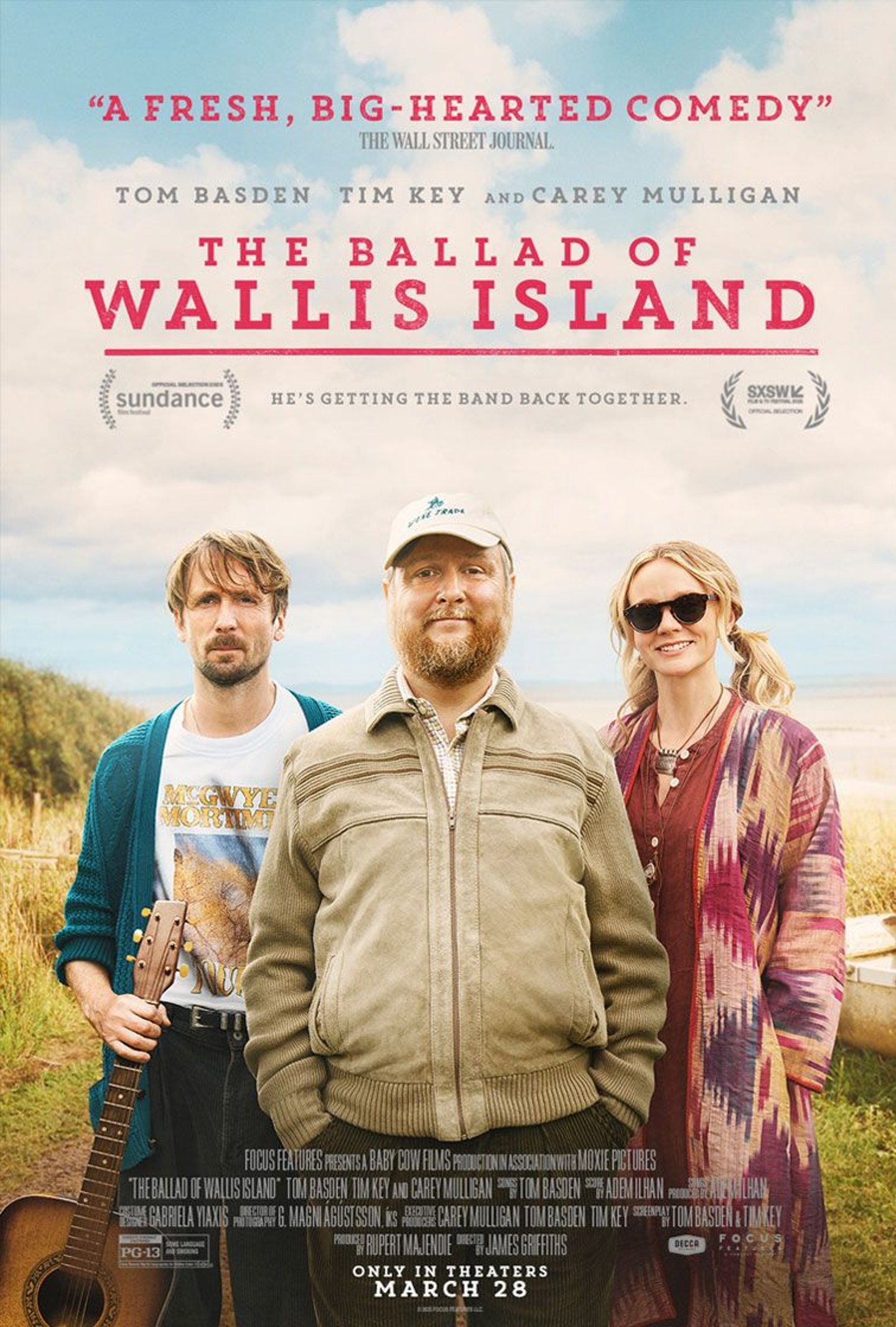
Then last year, I saw that Key had made a feature-length version of the same story: The Ballad Of Wallace Island. I was surprised. Why would he spend over ten years getting a feature off the ground when the short film had demonstrated that there wasn’t much in the idea?
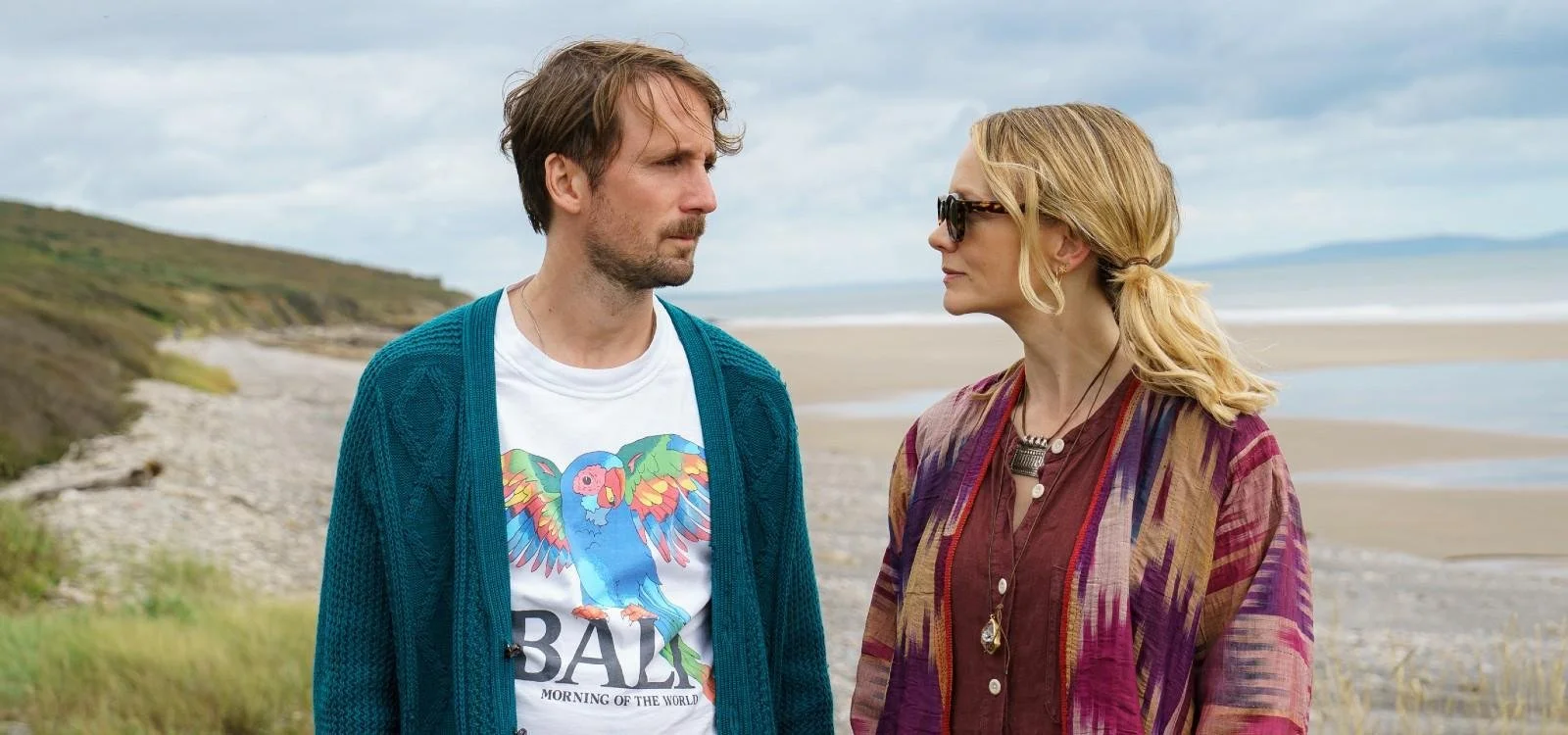
The idea was this: a lonely millionaire living on a remote island pays for a musician he idolises to come out on a dinghy and give a concert. It then emerges that the lonely millionaire himself will be the only person in the audience. As far as I can remember, that was about it. It was an OK premise and had some nice touches, but it wasn’t going anywhere. I wondered if he’d only written it because he had a mate with an island.
Then I saw some nice reviews of this new feature. It has Carey Mulligan in it and she’s pretty sought after. Why would she do it? After that, someone I knew told me that they liked it. So I gave it a go. After all, I have been known to dismiss things too quickly.
About halfway through watching, I had to accept that the film was fine. It was gently amusing and poignant. But it seemed to be suffering from the perennial UK Rom Com failing of too many half-jokes, relying on awkwardness instead of funniness, male characters who are diffident, buttoned-up, and too polite. I could go on.
Except I couldn’t – because I was wrong. The film was better than that, it emerged. It was ahead of me, and much smarter. The way I anticipated the film was going was not the way it went. It managed, for me, to tap into a yearning that many of us could identify: something about lost loves, golden eras gone, and an inability to start again, authentically.
And I’m pretty sure that was the film-makers’ game plan: get them to think it’s just X when it’s really Y. There’s a film-making lesson here:
The audience is always predicting: using their experience of what usually happens in films to anticipate what’s going to happen in this one. Use this. Make them think things like “He’s going to learn his lesson and get back together with the girl” … “That pretend friend is going to double-cross him later” … “Something is going to go wrong with the plan while they’re in the bank” and so on. And then make it about something smarter, deeper, unexpected that fits with everything you’d done so far, but wasn’t predictable.
This is very different from mere tricks where you fool the audience about what’s going on. Those tricks are part-and-parcel of some genres but that’s not what we’re looking at here. This is more about holding back some of your ambition from the audience. It’s about taking your characters and their situation more seriously and taking the audience beyond the routine experience the audience is expecting.
And it’s well done. There is a scene about 70-80% through, where the main character is seen playing swingball with himself. It’s a beautifully judged piece of acting, for starters. Not overdone, but just right – one of those exquisite moments when a comedian unexpectedly dips into a well of sadness.
And I’d draw attention to the power of the way it’s shot. So… when I tell you that we are watching the main character playing swingball with himself, how do you imagine that being shot? Where is the camera – what do we see, and not see?
Do you imagine the camera close to his sad face? Or further back, taking in his face and upper body? Further back still so he’s seen head to foot – far enough back to see the ball orbiting the pole? You could be clever and put the camera behind him so the audience can’t see his expression and avidly reads his body language – the way he’s hitting and missing the ball – to gauge his mental state.
All those are possibilities. But someone made a decision to go for a different shot.
They put the camera inside the house. The lonely guy is seen through a window. We overlook the scene. This is something not for us, something we are not meant to see. We are getting a stolen glimpse of an inner life that spreads out beyond the edges of this film.
The POV (point-of-view) is a powerful tool for a director. Often, the camera is positioned so that the audience have a neutral POV. We are a fly on the wall. Other times, the camera is positioned to give us the character’s POV – we see what they see. This is usual when something or someone important appears for the first time: the villain, the gates of the new school, the gun they have to use, their first sight of the person they’re going to fall in love with. And in other situations, we the audience are a character in the room, or just outside it. That’s what happened here. We were nosily overlooking a private moment.
Elsewhere, I talk about how the best thing about a film is often something that can only be done on film. And this little moment was an example. There is no equivalent of this scene in a novel, or on the stage. For me at least, it was using cinema to do what only cinema can do.
