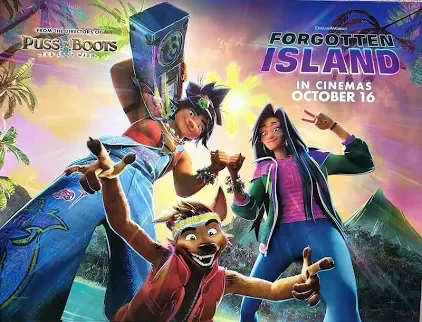
Forgotten Island opens in the UK this weekend. It’s a big Dreamworks animated fantasy. Walking out of a promotional screening, I was underwhelmed. But it got me thinking about animated films and where they stand in the recent history of cinema.
First, this film. Here is a list of good things about it:
· Its two main characters, childhood friends, are convincing and engaging.
· The animation feels really powerful and state-of-the-art.
· It is set in the Philippines with Philippine myths as a background, which is unusual.
· As the Director, Joel Crawford, pointed out, Philippinos work on Hollywood films quite frequently and this time they got to work on one about them.
The reasons why it doesn’t fully work are more interesting.
First, for me, is the relentless pace. Something seems to hit you in the face or the ears every few seconds. There seems to be an idea at the moment that the cinema experience should be the exact opposite of watching a film at home, or on the train, meaning that you get clobbered over the head constantly with sensory stimulation – Whoosh, Bam, Screech, Whoa….
I find myself switching off after a bit as it all passes by. It’s a negative feedback loop: the repetitive barrage of noise and images starts to lose its impact. Then I feel the film is trying to win me back by shouting louder, which in turn, loses me even more, like a teacher losing control in a noisy classroom. Am I just getting old?
Second, is what we call its ‘universe’. The Philippine folklore is very unfamiliar to the global audience. When the characters go through a portal to where those mythical creatures live, we don’t know the rules: Who has magic powers? How do they work? What are their limits? What laws of the real world apply in this world?
As a writer I was taught that you have to set up the rules early in the story and the audience then adjusts. If ghosts exist in your story, what are their powers and weaknesses, if any? If the hero has a superpower, what are its limits? Most importantly of all, if the characters try to effect change throughout the story (as they must!), what are the obstacles and how could they be overcome?
If those rules are unclear, if they change conveniently just when the writer needs to pull a surprise, or the character escapes from a deadly crisis with seemingly little effort because of a hitherto unmentioned magical loophole, then the stakes collapse. We don’t care anymore because we can’t assess the levels of danger or the chances of escaping it.
So, in this film, as the two friends got into and out of all kinds of jeopardy, the danger didn’t feel that real. The writing was very clever. Plot twists were well conceived and crafted. But they came so thick and fast that we had no time to feel the danger before the solution arrived and we were thrown an explanation, which too often came in explanatory dialogue. I’m not quoting exactly but ‘Hey wow, so it looks like if I really concentrate I can change shape at will’ is not far off.
The best scene in the movie is near the beginning, when the two girls make friends. They’re in the same class. One of them gives a presentation about traditional folk stories, gets too excited, and ends up being sent to the principal. She’s waiting outside the office, draped rebelliously over the chair, when the nerdy girl gets sent to join her – for correcting the teacher’s knowledge about the folk stories. The body language of the two girls shows their character. The joint predicament cements their bond. Best of all, it’s quiet. There are no fireworks, visual or aural, and we get to be in the moment, with the characters. I don’t think there is another moment in the whole film where the moment is valued and the audience is left to dwell in it.
I left with the impression that Forgotten Island is a brilliantly made not-very-good film. If you need to take a kid to see something over half term, you’ll be fine with it. What you won’t be doing is seeing it on Netflix in 10 years’ time and saying ‘Oh, you’ve GOT to watch that one.’
What ARE the films we say that about? And how do they get that status?
Here comes a very subjective view. Up until around 2000, there is a kind of canon of popular and well-thought of films in the Western tradition. Some people stand more on the art-house side (citing The Bicycle Theives and Blue Velvet). Some are more popular/commerical, with Butch Cassidy & The Sundance Kid and Gladiator making the list). But the people who sit in the same camps tend to name the same films, and argue about the exact order of greatness.
With cinema after 2000, I see this less and less. When I try to think of films made this century that I’d say ‘you’ve GOT to see that’, I struggle. It’s not that there are no good films. It’s more that I don’t know which of the ones I really liked count as things you simply have to see, not just because you might love it but because seeing it is part of ‘knowing about films’.
(Quick Time Out – I realise the glaringly obvious explanation for this is my age. You would expect me to go on about how all the best films were from my youth, or before. However, while acknowledging that possibility, I think there is a change in the art form around that date, if not necessarily a deterioration)
So let’s say we put the ‘too old’ objection aside and we entertain my theory for a while, to see where it goes. The motion before us is that after around 2000 there are no commonly agreed classics.
The exceptions to this, in my book, [don’t worry I’m not writing a book] are ALL animated films. Here we go:
Shrek
Up
Inside Out
Finding Nemo
Despicable Me + The Minions
We could argue. Does Monsters Inc go on the list? Frozen? The Toy Story sequels? But that’s the point. We’d be arguing about the same films. Just as if we were arguing about the greatest tennis player or the worst prime minister.
Why? Well I’ve got a theory for that too: everything changed with Toy Story in 1995. Everything. That was when animation became the place where great story-telling went to live.
One reason is that Pixar, whose first film it was, had figured out they could show two films at the same time, or at least serve two audiences. Adults would pick up on nuances and references that would be over the kids’ heads (and the heads of some adults, maybe) – and the kids wouldn’t mind, as long as those gags weren’t essential to the story. The Simpsons had already demonstrated the power of this: adults would be laughing at super-smart asides while the kids would laugh when Homer fell down the stairs and banged his head on each stair. I laughed at both.
That two-level pitching of the story is present in all those great animated films. They abound with clever in-jokes and cultural references that are ‘easter eggs’ for the knowing, or the plain old.
For Minions 3 you have to have lived through the 80s to enjoy Balthazar Bratt’s hair, shoulder pads, and keyboard-round-the neck.
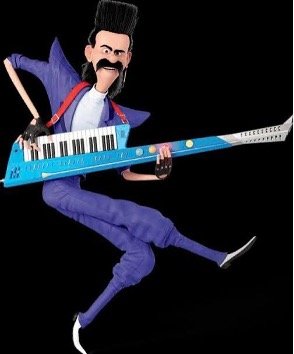
This is a criminal
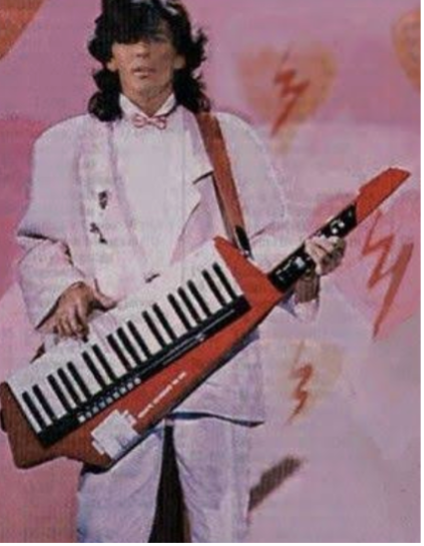
This criminal
Children couldn’t have any idea, then or now, what the adults are enjoying about this character. But they don’t feel that they’ve missed out.
Before Toy Story, animated films – mostly we’re talking about Disney – were family and kid-friendly in a way that made them repellent to a lot of adults. They were sickly sweet, dumbed down and patronising. Nothing remotely edgy could enter their world. The Little Mermaid (1989) and The Lion King (1994) are OK movies, but they’re only for kids. And even kids would rather watch Shrek.
The other reason Pixar changed the industry is probably Steve Jobs. Look, I know he gets bigged up too much and he’s everyone’s go-to example of the superstar CEO. But he deserves it. He turned Pixar (previously a failing hardware company under his ownership) into a digital animation company. They won a 3-picture deal from Disney and Toy Story was their first film. Jobs wasn’t involved with creative decisions at Pixar but it can’t be a coincidence that in the interim between being ousted from Apple and then going back to rescue it, Pixar changed everything. Here is him talking about animation versus live action film-making.
The story goes that they called a halt to the making of Toy Story because Woody’s character was just too mean. They went back and redeveloped the story to make him a little more likeable. In the final version, Woody is still very mean-spirited in the middle of the film, but his jealousy of Buzz Lightyear, his insecurity and his dedication to their owner, Andy, is calibrated so that he doesn’t lose the audience – he stretches our sympathy almost to its limit, but not beyond.
And it’s the story-telling in these animated films that elevates them. The digital animation was a huge step forward, but the power and depth of the stories is way ahead of virtually all commercial live action films.
Some examples…
In the first Toy Story film, Buzz Lightyear suddenly comes face-to-face with rows of action figures identical to himself. The awful realisation that he is not special, that he is just another toy, is the most perfect illustration of an existential crisis I’ve ever seen [and I’ve read L’Etranger and La Nausée].
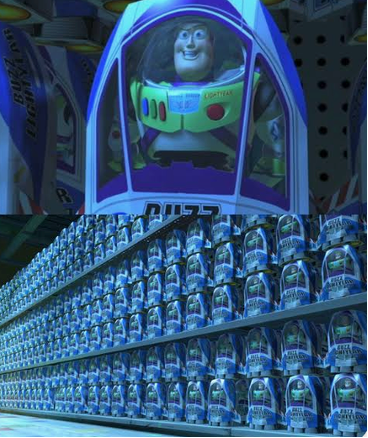
What we come to realise
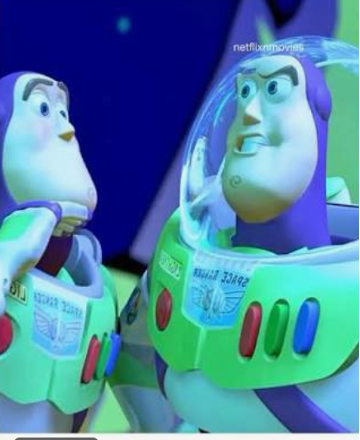
How it feels
In Inside Out the characters wander through the girl’s memories. The whole thing is a brilliant evocation of how human memory works, its frailty, and its essential role in personality. When Bing Bong, her imaginary friend, sacrifices himself – allows himself to be erased from existence – I had a lump in my throat.
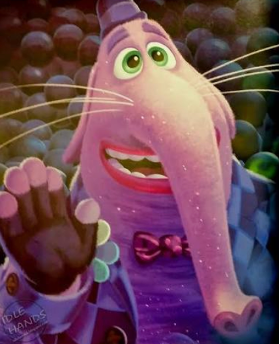
Does this guy have to die?
The opening sequence of Up is over 10 mins without dialogue, just pictures and music, representing a couple’s entire married life. At one point in the making of it, there was a theme of the wife slapping her husband that got cut. It was meant to be playful but they re-pitched the sequence as sorrowful. They fixed the story. The moment when she realises she can’t have children was cut because it was felt to have gone too far. It was then reinstated – probably because it holds the key to the whole story: The widower Carl’s gradual, reluctant, adoption of the boy, Russell. This is another example of Jobs’s point that radical rewriting of key elements of the story is often essential and, for various reasons, is rarely practical in live action; as he explains, the actors have gone home and the sets are taken down. Typical of Jobs to understand exactly what the practical business blockers are that make the creative decisions possible or impossible.
I do believe that in decades to come, anyone interested enough in film-making to write articles like this one will be citing these films as the masterpieces. They are the pinnacle of cinematic achievement in the twenty-first century.
Forgotten Island is not that. It tries to make up for its lack of trust in its own story by bombarding us with spectacle. That said, I think the review below overlooked some of its merits.